Hotel Sheet Sizes: Getting the Fit Right Across Properties
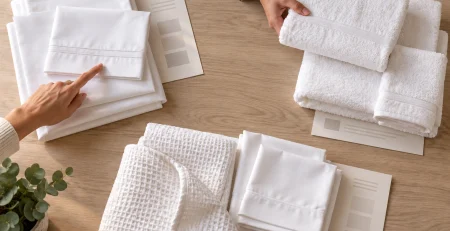
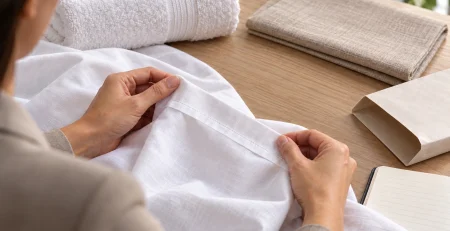
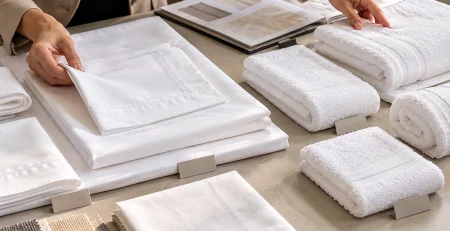
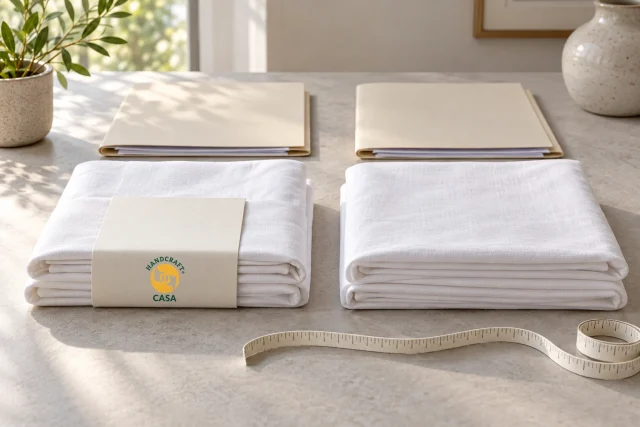
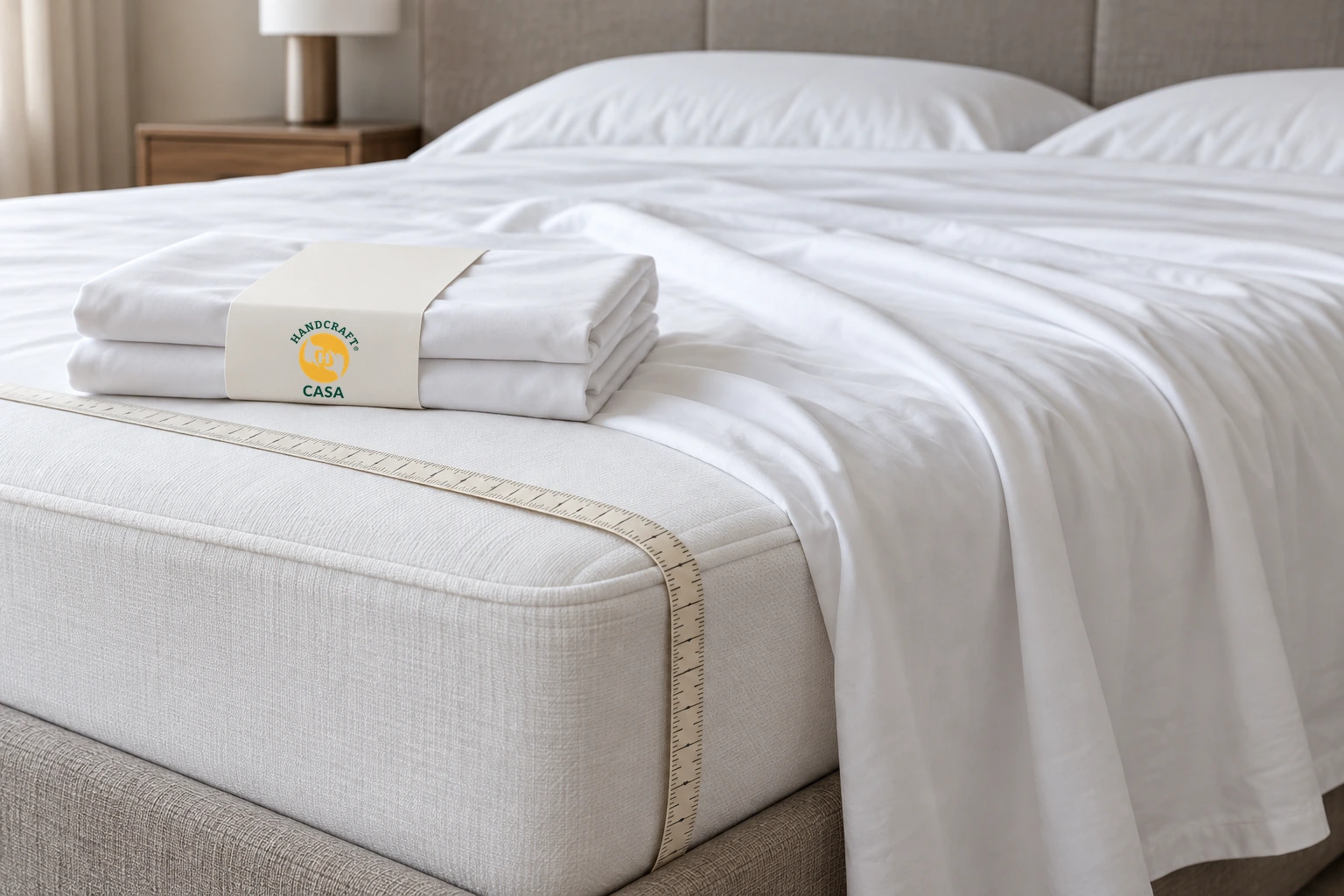
Illustrative image. Final specifications confirmed at quotation.
When a hospitality distributor supplies sheets to several properties, a shared size name can conceal different mattress depths, toppers and laundry requirements. A sample that fits one customer’s bed may not establish the fit needed by another.
Start with measurements rather than a size name. “King”, “queen” and other labels are convenient shorthand, but the dimensions on the specification are what buyer and supplier need to agree.
Measure the complete bed setup
Record the mattress width, length and depth in one unit of measurement. Include the topper if it normally remains on the bed. Note whether every bed in the room category has the same dimensions; a room name alone may hide more than one mattress size.
Then identify the sheet style. A fitted sheet needs an agreed pocket construction and fit. A flat sheet needs enough usable fabric for the intended tuck and presentation. Do not assume that adding the mattress depth to a size calculation fully specifies either product.
Write down what each dimension means
Ask whether the quoted dimensions describe the finished product before laundering or a required dimension after an agreed care process. Record the measurement method and any tolerances. This avoids a situation where both parties use the same numbers but mean different things.
- Mattress and topper dimensions
- Flat or fitted construction
- Required tuck, coverage or pocket fit
- Finished-product measurement points
- Agreed tolerances and laundering conditions
Keep bed dimensions and sheet dimensions on separate lines. They are related, but they are not interchangeable.
Discuss dimensional change before approving the size
Washing and drying can change a textile’s dimensions. The amount needs evidence for the particular product and process; a universal allowance is not a reliable substitute.
For example, a hypothetical sheet measuring 250 cm in one direction would measure 242.5 cm if it shrank by 3% in that direction. That calculation illustrates why a small percentage can matter. It does not predict Casa product performance or establish a recommended allowance.
ISO 5077 describes the determination of dimensional change after specified washing and drying procedures. AATCC TM135 addresses dimensional changes in fabrics after home laundering. A home-laundering result should not be treated as automatic proof that the same item suits a property’s commercial laundry process.
Trial the sheet where it will be used
Agree a sample assessment with the supplier and your laundry team. Record the starting dimensions, use the intended compatible process, then measure again and refit the sheet to the correct bed setup. Check corners, tuck, coverage and ease of handling.
Include the person who makes up the beds. A technically adequate dimension may still need practical review if staff struggle to fit the sheet neatly. Record the observation rather than changing the specification informally.
Keep the approved fit available for reorders
Retain the final dimensions, construction, sample reference and care assumptions together. If the mattress or topper changes later, revisit the sheet specification before reordering.
Share this with purchasing and housekeeping: measure the complete bed, define the finished sheet, agree the care process and check the fit after the trial.
Build a size matrix before combining quantities
Group customer or property requirements by actual mattress setup and required finished sheet size. Keep exceptions visible, including deeper toppers or a different pocket construction. Combine quantities only where the agreed specifications match, then retain the property-to-product reference for replenishment.
Casa bed-linen enquiries are specification-led. Share your bed measurements, intended use, quantities and care requirements so the relevant options can be discussed. See how working with Casa is organised.
Further reading: ISO 5077 dimensional-change method and AATCC TM135 home-laundering method.