Private Label Linen: Approving Your Product, Branding and Packing
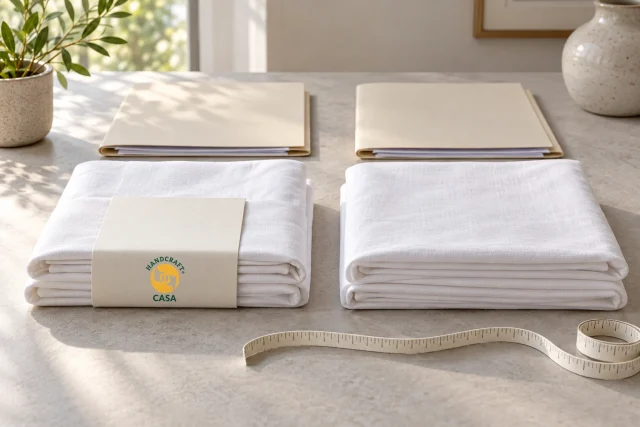
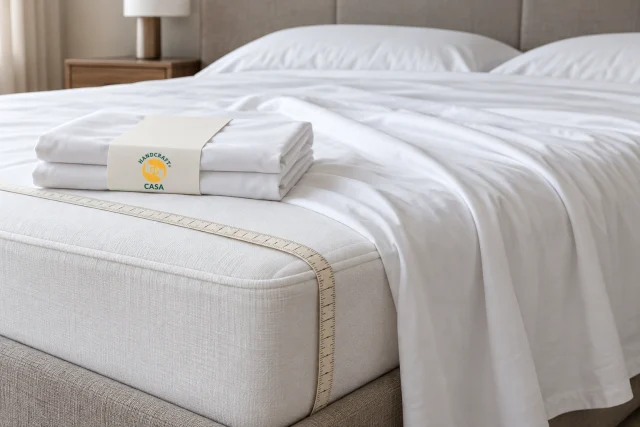
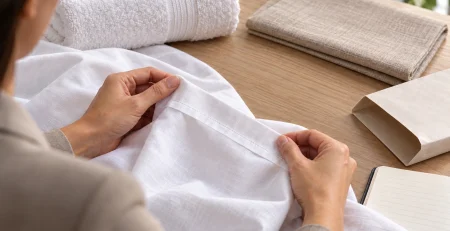
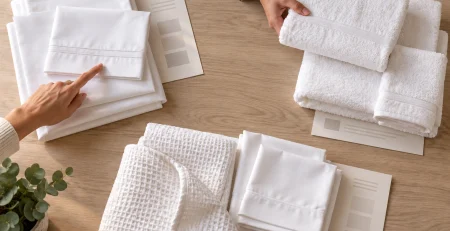
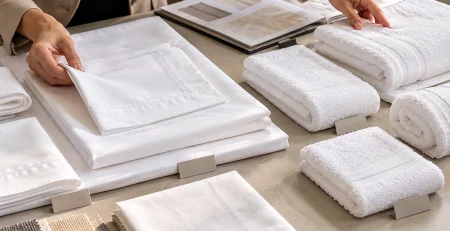
Illustrative image. Final specifications confirmed at quotation.
For an established private-label brand or textile wholesaler, every label connects the finished product to your business. Before approving a bulk collection, decide who checks the product, who checks the branding and who can approve the final version.
That simple division prevents a common planning gap: the artwork is approved while the product specification is still changing.
Confirm what can be customised
Begin with the item, quantities, destination and intended use. Ask which branding options are feasible for that product. An option suitable for one towel, cover or apron should not be assumed available on every construction.
Keep the request precise. Specify the intended position, dimensions, wording and colour references. If the method is undecided, ask for options instead of embedding an unconfirmed method in the order brief.
Approve the branding on the product
A flat artwork proof is useful for checking spelling and proportions. It cannot answer every question about how the branding will sit on the finished textile.
Where a sample or other approval stage is agreed, review the branding alongside the product. Check its position when the textile is folded, fitted or worn. Inspect the reverse side and any effect on handling. Include the care conditions the item is expected to face.
For a hospitality item, involve operations as well as design. For a retail product, review the consumer-facing information and the packing presentation together.
Separate four approval decisions
- Product approval: dimensions, composition, construction, colour, finish and any relevant performance requirements.
- Branding approval: exact wording, placement, scale and agreed method.
- Information approval: accurate product descriptions, care information and any destination-specific labelling requirements that need specialist review.
- Packing approval: agreed unit grouping, identification text and presentation requirements.
One person may own several decisions, but each should be recorded. Avoid assuming that approval of a logo also approves fibre-content wording or care instructions.
Keep unsupported claims off the label
Terms such as “organic”, “antibacterial” or “commercially washable” create separate evidence questions. A branding request does not establish that the product meets those claims. Ask what can be substantiated for the exact item and intended market before finalising the wording.
This is a buying-control recommendation, not a complete legal labelling checklist. Requirements vary by destination and product.
Record the approved version and later changes
Give the approved file or sample a clear reference. Retain the final specification, artwork version, approval date and responsible person together. If the product colour, fabric or branding position changes afterwards, check which approvals need to be repeated.
A useful final question is: “Could someone who was not in our meetings identify the exact version we approved?” If the answer is no, tidy the record before progressing.
Approve the assortment as well as the individual item
List the initial quantities by design, colour and size, then identify which versions share the same label or packing artwork. Review any differences explicitly. Record forecast replenishment separately from the first order, and retain the approved product and artwork references for later enquiries.
Casa private-labelling enquiries are assessed against the chosen product and order requirements. Share your branding brief early so feasibility, sampling and quotation details can be discussed together.