Cotton or Cotton Blend? A Sample Comparison for Hospitality Supply
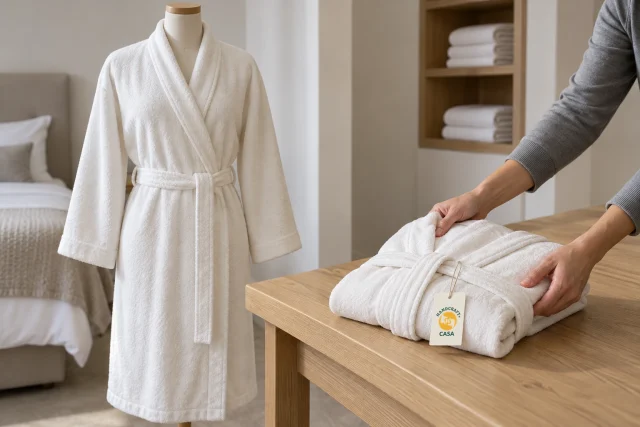
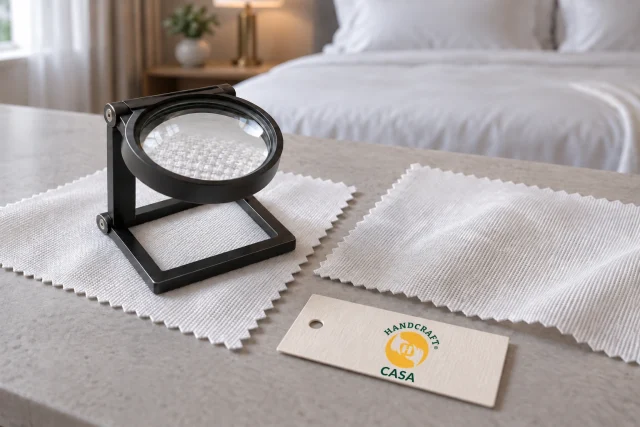
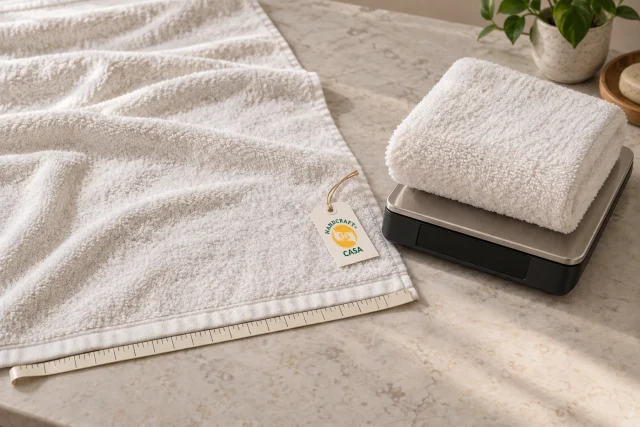
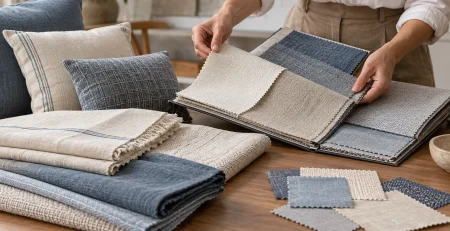
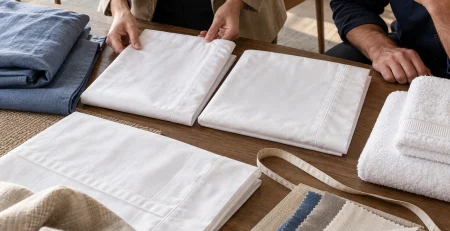
Illustrative image. Final specifications confirmed at quotation.
A hospitality linen distributor choosing between cotton and a cotton blend needs to compare complete products against the same customer requirement. Fibre content matters, but it cannot establish fit, handling, laundry compatibility or the commercial case on its own.
Use these eight checks to turn the choice into a clear buying decision.
-
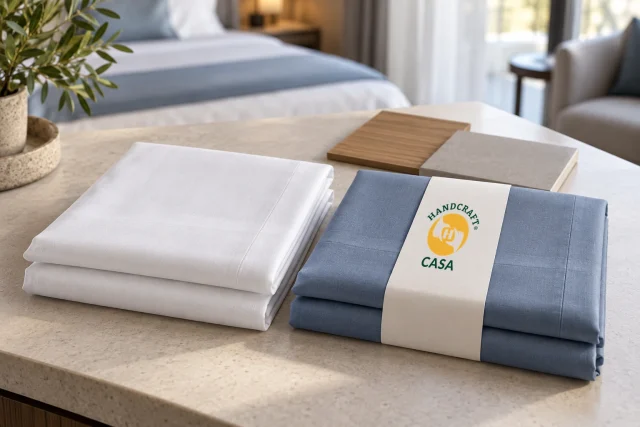
Define the job before choosing the fibre. For a hotel sheet, the decision may involve fit, feel, appearance and laundry compatibility. For an apron, it may involve coverage, movement and care. Write down the intended use and the requirements that matter to your business before deciding which composition you prefer.
-
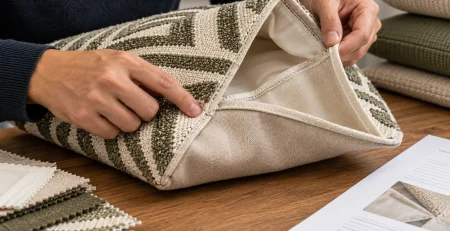
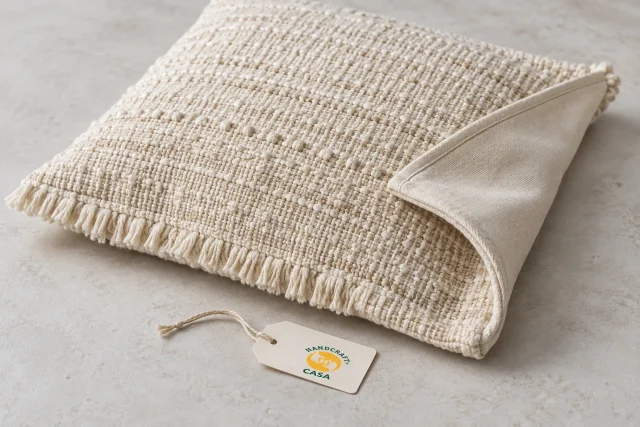
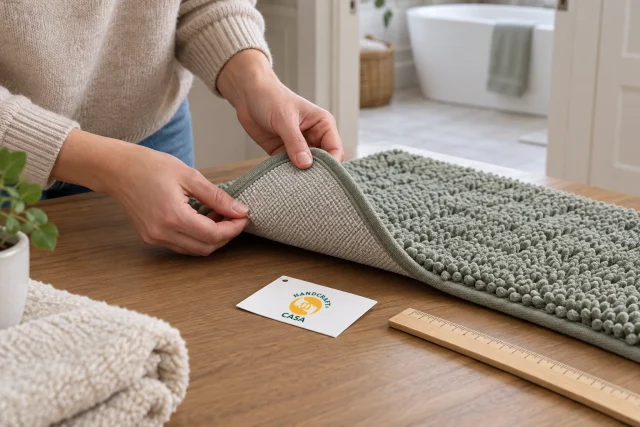
Ask what the actual blend contains. Cotton blend is incomplete information for a buying comparison. Obtain the fibre names and proportions for the item being considered. Clarify relevant components such as front and reverse fabrics or pile and ground. Do not infer composition from a soft hand, a natural-looking colour or a photograph.
-
Compare construction alongside composition. Two products can differ in dimensions, yarns, weave, weight and finish as well as fibre content. Cotton Incorporated's sheeting guide identifies multiple construction factors that influence a finished sheet. When several variables change together, the comparison cannot isolate the effect of the fibre alone.
-
Check the finished item in its intended setting. Assess fit and function against the actual bed, table, insert or other relevant setup. Record the sample reference and a specific observation. Sample A fitted our bed setup better in this trial is more defensible than a claim that one fibre always performs better.
-
Agree how feel and appearance will be reviewed. Include the people who will use and handle the product. Compare the samples against the same brief, and record the features behind a preference. Keep practical observations separate from performance claims that would need testing.
-
Confirm care compatibility before a trial. Discuss the specified care with the supplier and the customer’s operations team. Compare laundering results only under conditions suitable for the products and agreed for the evaluation. Record dimensions and visible observations before and after. If a formal performance result matters, agree the appropriate test and acceptance criteria.
-
Compare costs without inventing savings. Check the confirmed price, packing and delivery terms alongside the product requirements. Do not infer a service life, energy saving or replacement rate from a fibre label. Any operating-cost comparison needs actual information or clearly identified assumptions.
-
Keep the complete approved specification. Retain the preferred sample reference with its composition, dimensions, construction, care requirements and acceptance decisions. That makes a repeat order clearer than asking for the same cotton blend. Record which points are approved and which still need clarification.
Keep customer requirements visible in the comparison
Record which accounts or property types each sample is intended to serve. Where requirements differ, maintain separate decisions rather than declaring one composition the winner for the entire range. Keep any sample observations tied to the tested item, care conditions and agreed specification.
When discussing an enquiry with Casa, explain the intended use and which choices remain open. Available specifications and commercial terms are confirmed for the individual requirement. Explore Casa’s guidance on choosing your linen.
Technical background: Cotton Incorporated’s sheeting guide explains why a sheet should be assessed beyond a single specification number.