Towel GSM: How Hospitality Wholesalers Compare Their Range
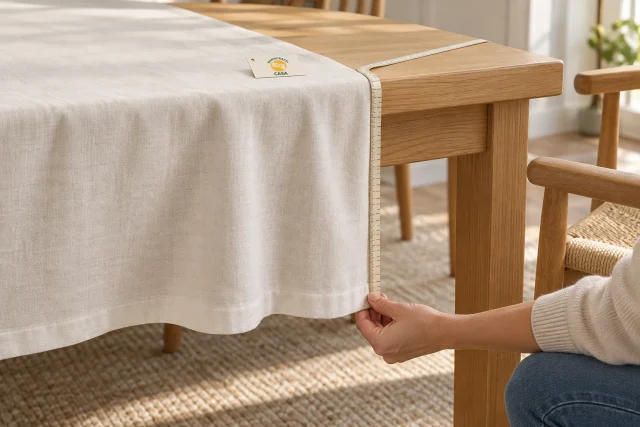
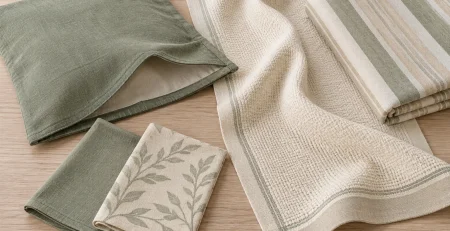
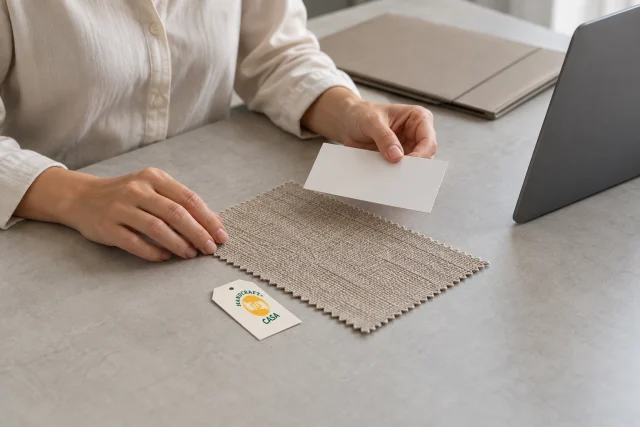
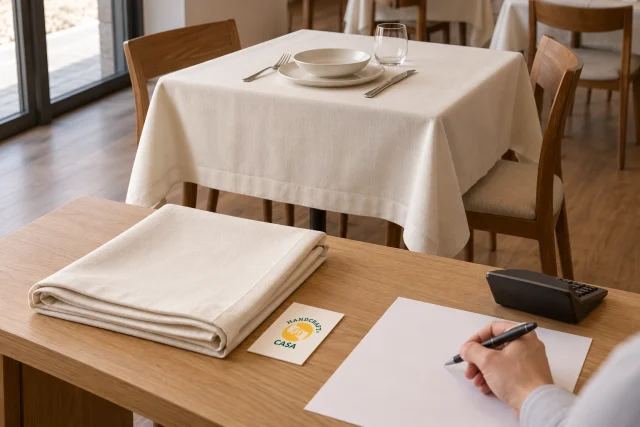
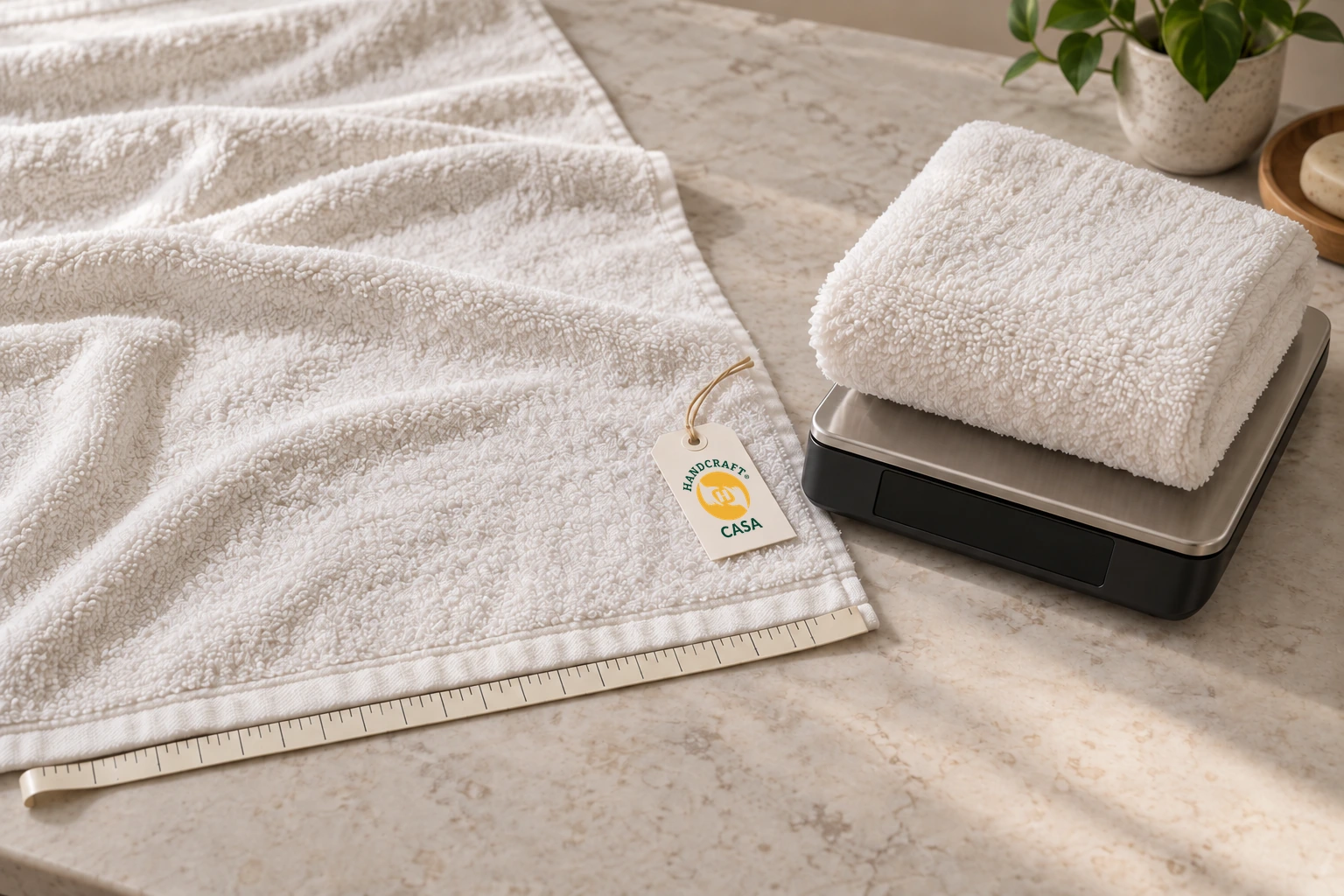
Illustrative image. Final specifications confirmed at quotation.
Hospitality wholesalers often need more than one towel line because their customers differ in guest presentation, handling and laundry requirements. Use GSM to describe and compare those lines, alongside the evidence needed for each intended use.
GSM means grams per square metre: mass per unit area. It does not, by itself, establish absorbency, softness, drying performance or how long a finished towel will remain suitable for use.
Keep size and weight separate
A large towel can weigh more than a smaller towel even when both have the same GSM. Compare finished dimensions and the weight specification together.
For a simple illustration, an item measuring 70 cm by 140 cm has an area of 0.98 square metres. If its measured dry weight is 490 grams, dividing 490 by 0.98 gives an approximate whole-item figure of 500 grams per square metre.
This is a buyer’s arithmetic check, not a laboratory determination or a Casa specification. Borders, hems, measurement conditions and how a supplier defines the stated weight can affect comparisons. Ask which basis is being used and agree any tolerance.
Ask what is behind the number
Request the fibre composition and construction details for the actual towel. Two samples with the same quoted GSM can have different surface structures, yarns, finishes and handling characteristics.
Look at the complete item: the pile, borders, hems and any branding. Feel it folded and open. Check whether the size suits the intended use and whether the finished item is practical for staff to store and handle.
Decide what your trial needs to answer
For a hospitality supply range, bring your buying team and the relevant customer housekeeping or laundry contacts into the comparison. Set a short list of questions before reviewing samples:
- Does the size suit the intended service?
- How does the towel feel before and after the agreed care process?
- Does it absorb and dry suitably under the conditions you intend to use?
- What happens to dimensions, appearance, hems and any branding?
- Does its handling and storage fit your operation?
Use comparable trial conditions and record observations consistently. Where a formal performance result is needed, agree the appropriate test and acceptance criteria rather than relying on a quick informal demonstration.
Give each towel line a clear customer use
One customer may prioritise a particular handle while another has a different handling or laundry requirement. Use actual samples and trial results to explain the role of each line in your range. A single GSM figure cannot settle every customer’s decision.
Assess absorption and drying requirements separately under the agreed conditions. Neither a lower nor a higher GSM guarantees the result your customer needs.
Put the decision into the quotation
Record the selected dimensions, composition, construction, weight basis, finishing details and agreed quality checks. Keep the approved sample reference with the quotation so a later reorder does not depend on “the heavy white towel” as its specification.
For Casa towel enquiries, share the intended use, preferred dimensions, quantities and laundering requirements. The specification and commercial terms are agreed for the individual order. Read Casa’s approach to quality and performance requirements.
Further reading: AATCC textile test methods.
Use Casa’s towels and bath linen to identify the product references relevant to your enquiry.