Table Linen Sizing for Hospitality Orders: Measurements, Drop and Fit
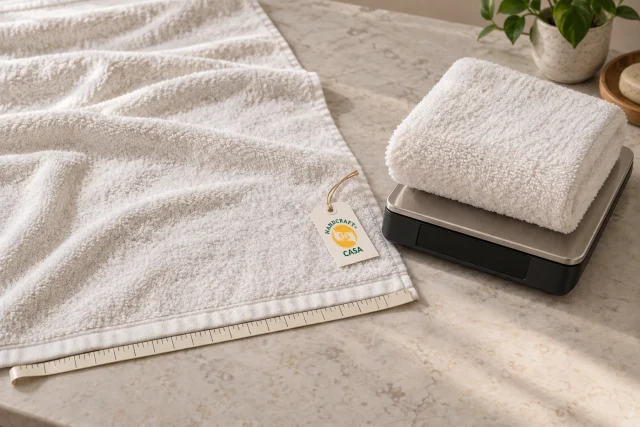
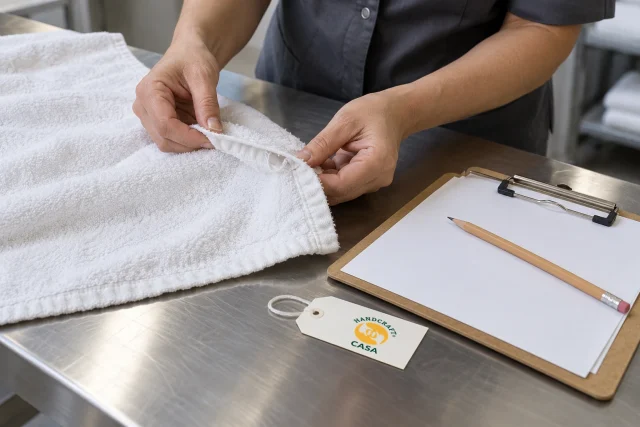
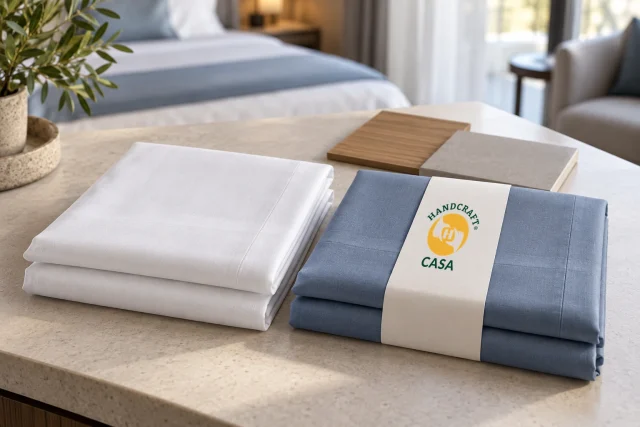
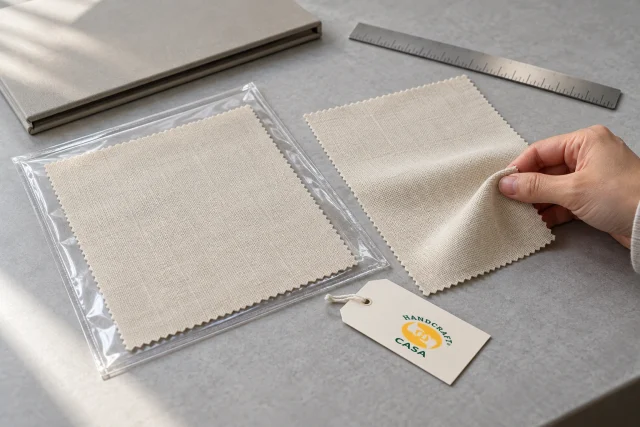
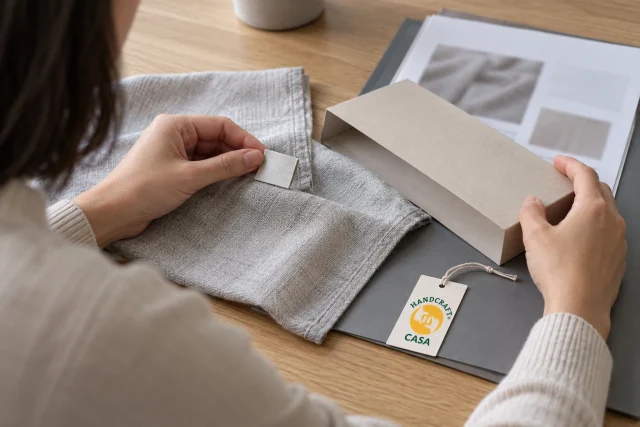
Illustrative image. Final specifications confirmed at quotation.
For a table-linen distributor, a customer request for cloths “for six-seater tables” leaves too much unresolved. Collect tabletop measurements, the intended drop and service requirements for each setting before combining them into a quotation request.
Take those decisions before requesting a bulk quotation. They help the supplier understand the finished size and help your team check the sample against the actual setting.
Measure the table you will dress
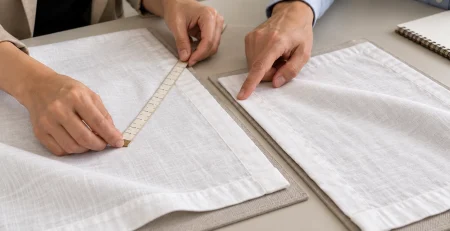
Record the shape and dimensions of the tabletop. For a rectangle, measure its length and width. For a round table, measure the diameter. If tables extend, join together or vary between rooms, list each arrangement separately.
Check anything that changes the practical fit: chair arms, bench seating, table legs and the way staff move around the setting. Review the intended arrangement with the operations team rather than selecting a drop from appearance alone.
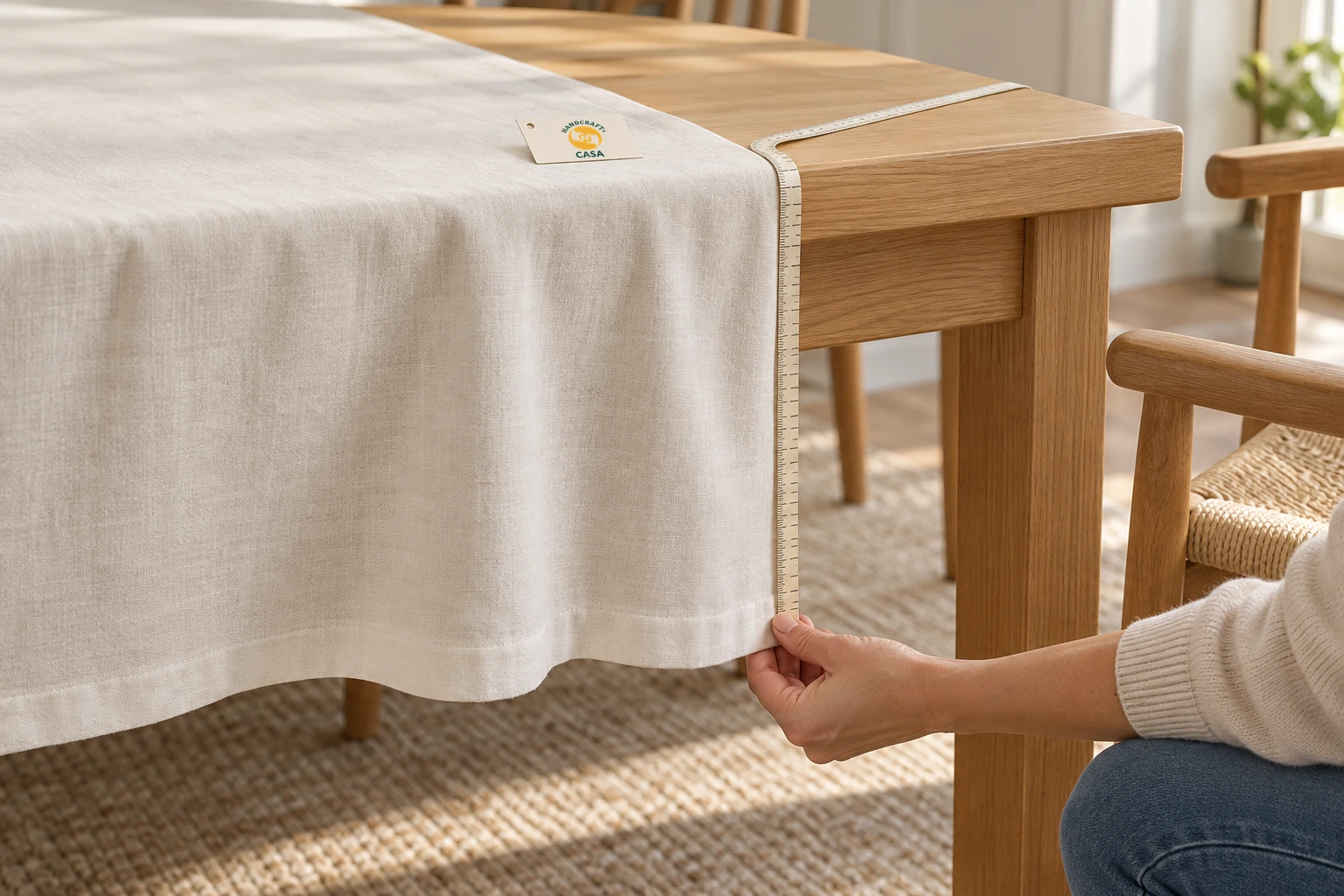
Choose the drop before calculating the cloth size
The drop is the amount of fabric intended to hang beyond the tabletop edge. For a rectangular table with an equal drop on all sides:
- Cloth length = tabletop length + twice the chosen drop
- Cloth width = tabletop width + twice the chosen drop
For a round table, cloth diameter = tabletop diameter + twice the chosen drop.
These are simple finished-coverage calculations. They do not include a product-specific laundering allowance or manufacturing tolerance.
Two examples to check with your team
A hypothetical rectangular table measuring 180 cm by 90 cm, with a chosen 25 cm drop on each side, calls for 230 cm by 140 cm of finished coverage.
A hypothetical round table measuring 120 cm across, with the same 25 cm drop, calls for a 170 cm finished diameter.
The 25 cm figure is an example, not a recommended drop for every venue. Choose the actual drop around your setting, seating and service requirements. Use consistent units throughout the order brief.
Ask how the size will behave after care
Clarify whether the quoted finished dimensions are before laundering or whether you need a particular coverage after an agreed process. Ask for relevant dimensional-change information and confirm suitable care for the selected textile.
Do not add an arbitrary allowance and assume it solves the issue. ISO 5077 addresses measuring dimensional change after specified washing and drying procedures; it does not provide one universal allowance for all table linen.
Check more than the outside dimensions
Inspect the edge finish, corners, seams where applicable and the way the cloth lies on the table. For a runner, record both the width and intended overhang at the ends. For placemats, assess the usable place-setting area and how neighbouring settings fit together.
Where designs or borders are involved, check their placement on the actual table. A pattern that looks balanced in a flat sample may sit differently once the cloth hangs over the edge.
Keep a table-by-table order list
Record each table reference, shape, dimensions, chosen drop, required finished cloth size, quantity and care assumptions. Approve a sample in the intended setting before finalising a larger order where sampling has been agreed.
Save this sequence: measure the table, choose the drop, calculate the coverage, discuss care-related dimensions, then check the sample in place.
Group quantities by the finished requirement
Build the order schedule around shape, required finished size, colour or design and quantity. Keep the customer or venue reference alongside it. Tables with similar seating counts may need different cloths; only combine lines when their agreed requirements actually match.
For Casa table-linen enquiries, share your dimensions, quantities, intended setting and delivery requirements. Available specifications and any sampling arrangements are confirmed for the enquiry. Read about working with Casa.
Further reading: ISO 5077 dimensional-change method.