Macrame, Tufted or Woven? Specifying a Wholesale Cushion Range
Illustrative image. Final specifications confirmed at quotation.
When building a wholesale cushion-cover collection, construction names help your customers understand what they are selecting. Raised patterns, fringe and related colours may coordinate visually while coming from different methods and component combinations.
Confirm the construction of each design before naming the range, preparing listings or agreeing care information. The appearance of a collection can be shared without treating every cover as the same product.
What the three terms mean
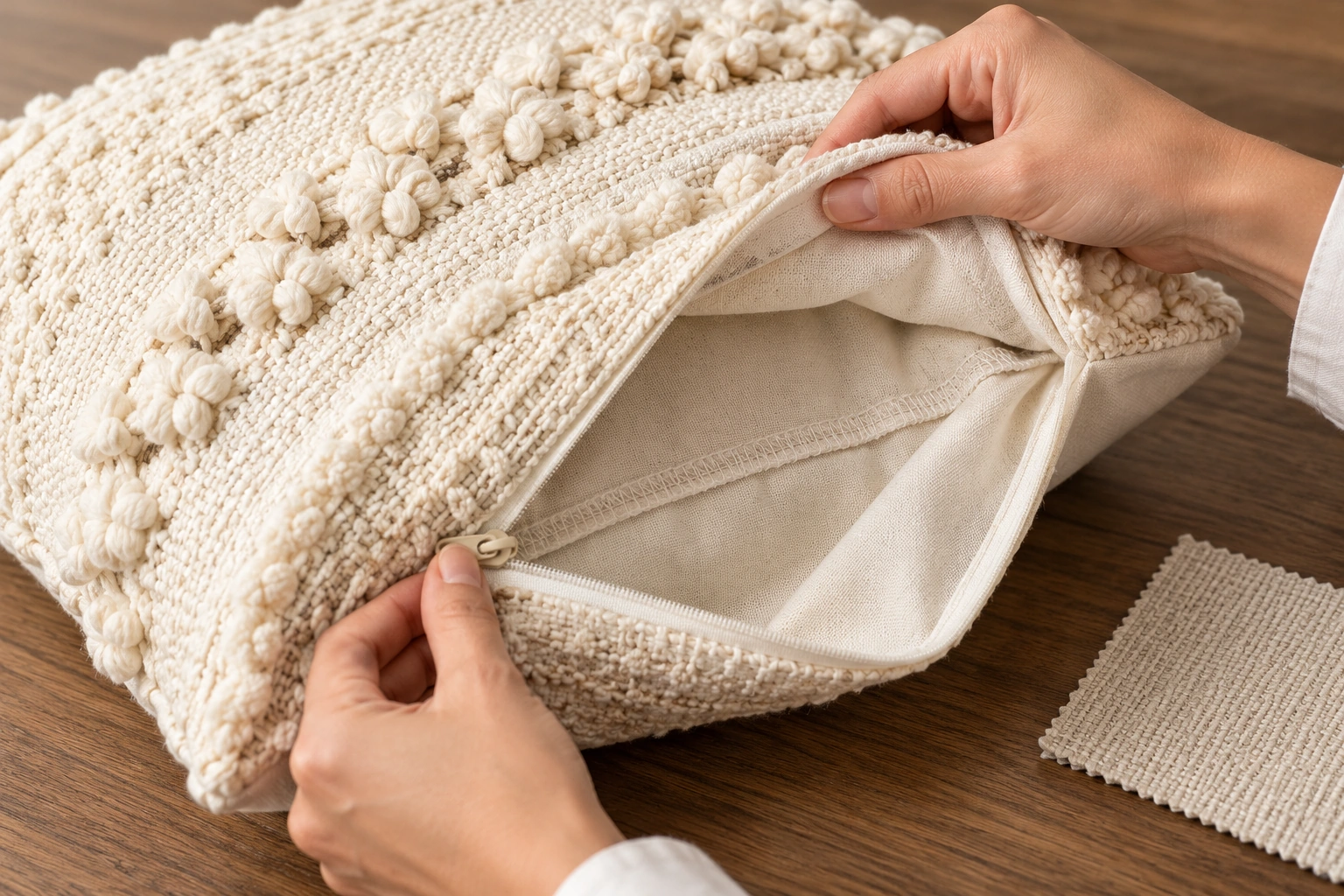
Macrame uses knotting. Woven fabric interlaces lengthwise and crosswise yarns. Tufting inserts pile yarn into a backing. A complete cushion cover may combine different methods, so the label still needs to be checked for the particular item.
Start with what you can actually verify
If a product is described as macrame, tufted or woven, ask the supplier to confirm the method for the exact item. Do not relabel it solely from a front-facing photograph.
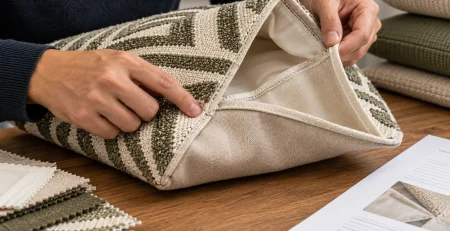
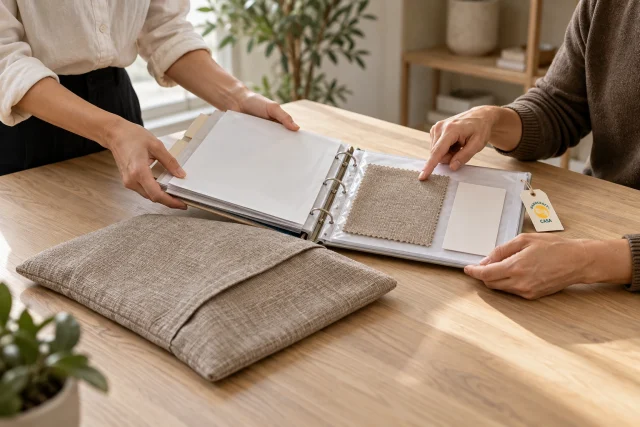
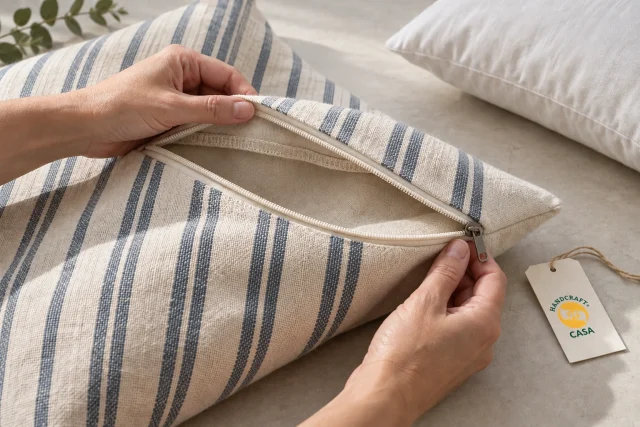
Request relevant construction information and inspect the reverse, seams and any backing where a sample is available. A decorative surface can hide details that matter to the complete product.
Keep appearance and construction separate
Words such as textured, fringed or patterned describe visible features. They can help explain the design, but they do not replace a verified construction description.
Similarly, a beige or off-white appearance does not prove a particular fibre content or justify a claim that the complete product is natural.
Specify the complete cover for resale
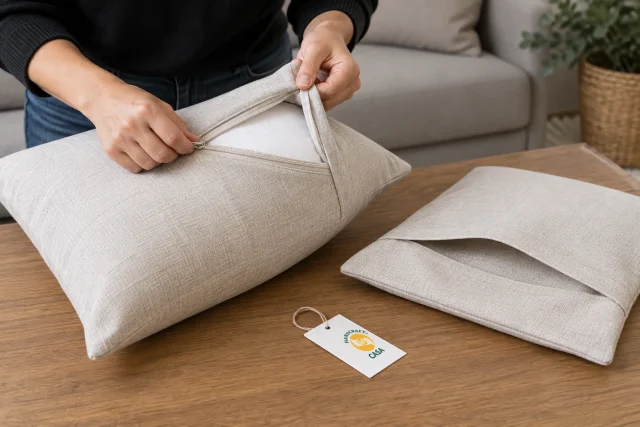
Record the face and reverse materials, closure, trims and dimensions. Ask whether the construction description applies to the whole cover or one decorative component.
For your wholesale sheet and downstream retail listing, make clear what the customer is receiving. If an insert is not included, that should not be left to interpretation.
Resolve care for that design
Do not copy instructions from another decorative cover. The complete combination of materials, backing, closures and trims needs appropriate care guidance.
If a wholesale customer intends to supply the cover into hospitality, obtain its maintenance requirements and assess suitability separately. A construction name alone does not establish commercial-laundry compatibility.
Write the final description from confirmed facts
Combine the verified construction with useful buying details: dimensions, composition, closure, design features and care. If the method remains unconfirmed, keep the question open rather than publishing a more specific label than the evidence supports.
For Casa cushion-cover enquiries, identify the product reference and the construction details you need confirmed. This article does not resolve the composition or method of any particular listing.
Construction references: Getty vocabulary for macrame, CottonWorks on interlacing, and European Commission textile reference document, section 2.5.3.1 on tufting.
Use Casa’s cushion-cover catalogue to identify the product references relevant to your enquiry.