From Textile Sample to Bulk Specification: Closing the Approval Gaps
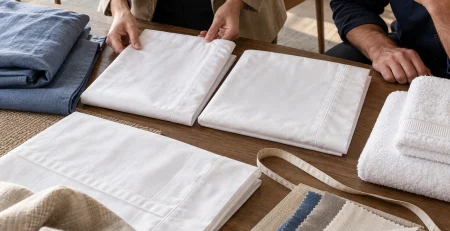
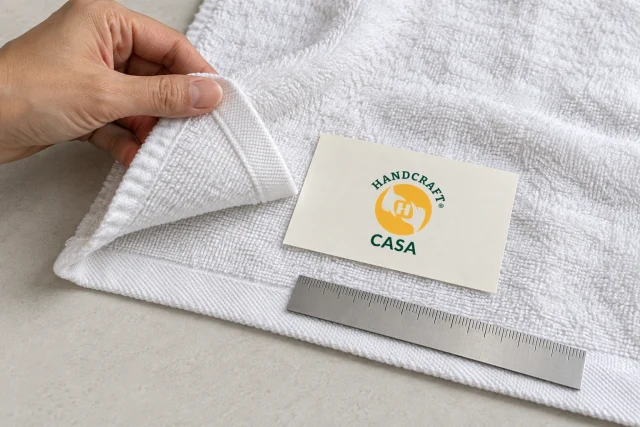
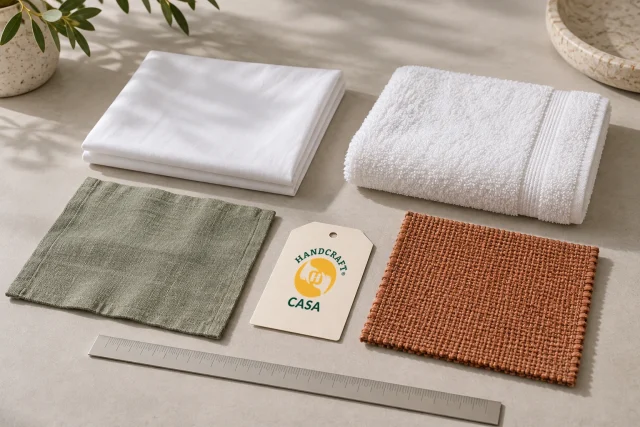
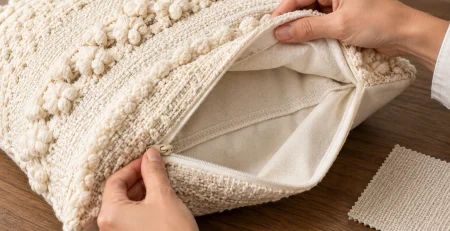
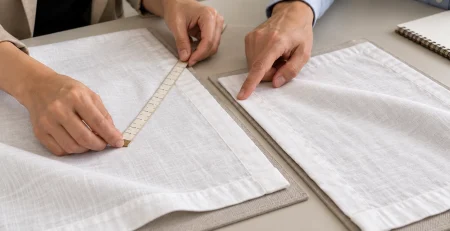
Illustrative image. Final specifications confirmed at quotation.
A hospitality importer may receive a customer’s approval of a sample before every specification detail is settled. Before placing a larger order, make sure someone outside that discussion can identify the accepted product, the approved attributes and any decisions still open.
A sample becomes much more useful when its physical reference and written specification stay together.
Give the sample an identity
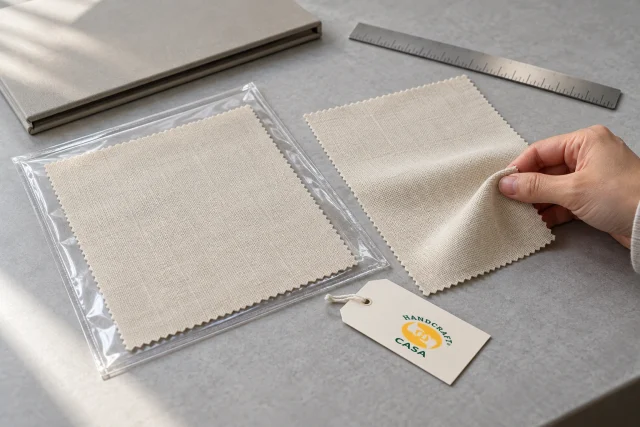
Record the supplier reference, product name and the date received. Distinguish the original sample from a revised one. If several colours or sizes arrive together, make each reference unambiguous.
A photograph can help locate a sample in your records. It should not replace measurements, composition information or any physical colour reference used for approval.
Write down what you are approving
For a textile item, the record may include finished dimensions, composition, construction, colour, seams, closure, trims, branding and packing requirements. Include only the attributes relevant to the product, but do not leave an important decision in someone’s memory.
Separate confirmed details from open questions. “Colour approved; closure change awaiting revised sample” is clearer than a general “approved” message followed by several qualifications.
Agree how variation will be judged
Discuss measurement points, tolerances and relevant acceptance criteria. Where a handmade or decorative feature can vary, ask what variation is expected and agree how it will be assessed. Avoid inventing a numerical tolerance because a form contains an empty box.
Where testing or a care trial is required, identify the sample and the conditions used. Keep its results with the same approval record.
Control changes after approval
If the construction, colour, dimensions or trim changes, record what changed and who needs to review it. A revised sample should not inherit approval automatically from an earlier version.
For larger teams, assign one person to maintain the current record. This helps purchasing, design and operations work from the same information.
A usable sample approval record
- Sample reference and version
- Product specification and intended use
- Approved attributes and outstanding questions
- Relevant trial or test references
- Acceptance criteria and agreed variations
- Reviewer, decision date and final approval status
When the first repeat order comes around, this record provides a much stronger starting point than “please send the same as last time”.
Link customer approval to the supplier brief
Keep the customer reference, supplier sample reference and intended product code together. If several accounts share a specification, record which approvals apply to that common item and which concern a separate variant. Pass unresolved changes into the quotation discussion before treating the sample as a complete production reference.
Sampling arrangements with Casa depend on the product and enquiry. Discuss the required approval steps as part of the bulk-order process; do not assume that requesting a sample confirms an order or a particular sampling service.